
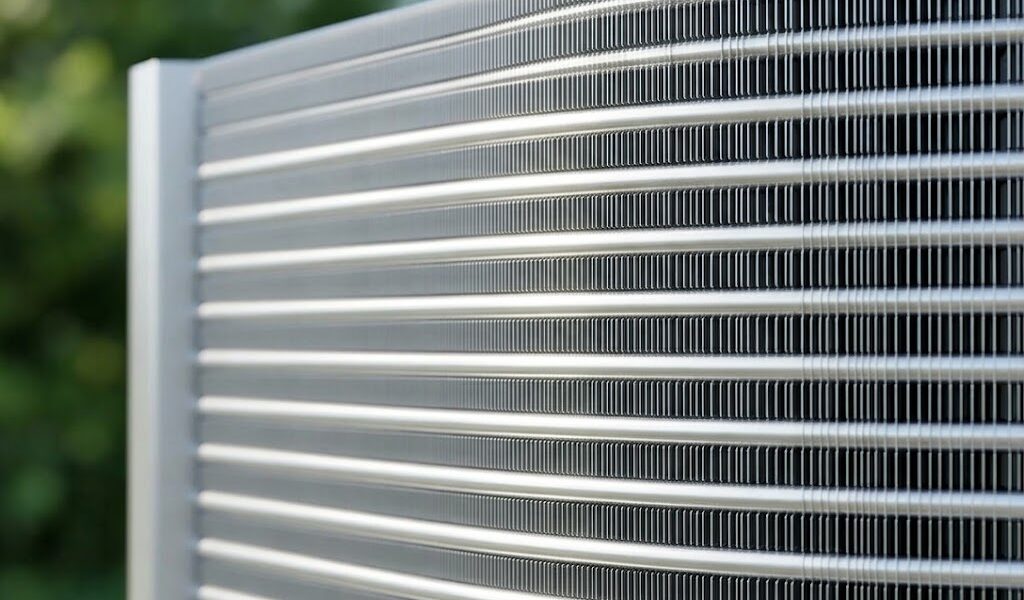
Clean HVAC Coils play a critical role in helping your air conditioner transfer heat efficiently and maintain comfortable indoor temperatures. When dust, pet hair, and environmental grime build up on your evaporator or condenser coils, your system loses its ability to shed heat effectively. Over time, restricted heat transfer forces your cooling system to run far longer than normal, driving up monthly electric bills and straining internal mechanical components. For homeowners dealing with relentless St. Petersburg humidity, proactive coil maintenance is essential to avoid sudden equipment failures during the hottest months of the year. Speed Air and Heating can help homeowners address these HVAC maintenance needs.
Key Takeaways
- Remove heavy dirt accumulation to prevent restricted heat transfer across indoor and outdoor copper coils.
- Maintain steady indoor airflow by keeping the evaporator aluminum fins free of dust build-up.
- Protect the outdoor condenser unit from lawn clippings and airborne grime to ensure fast heat release.
- Schedule regular maintenance checkups to spot minor refrigerant and drainage issues before costly breakdowns happen.
- Rely on professional service whenever internal components are difficult to reach or heavily caked in mud.
How Do A/C Coils Actually Cool Your Home?
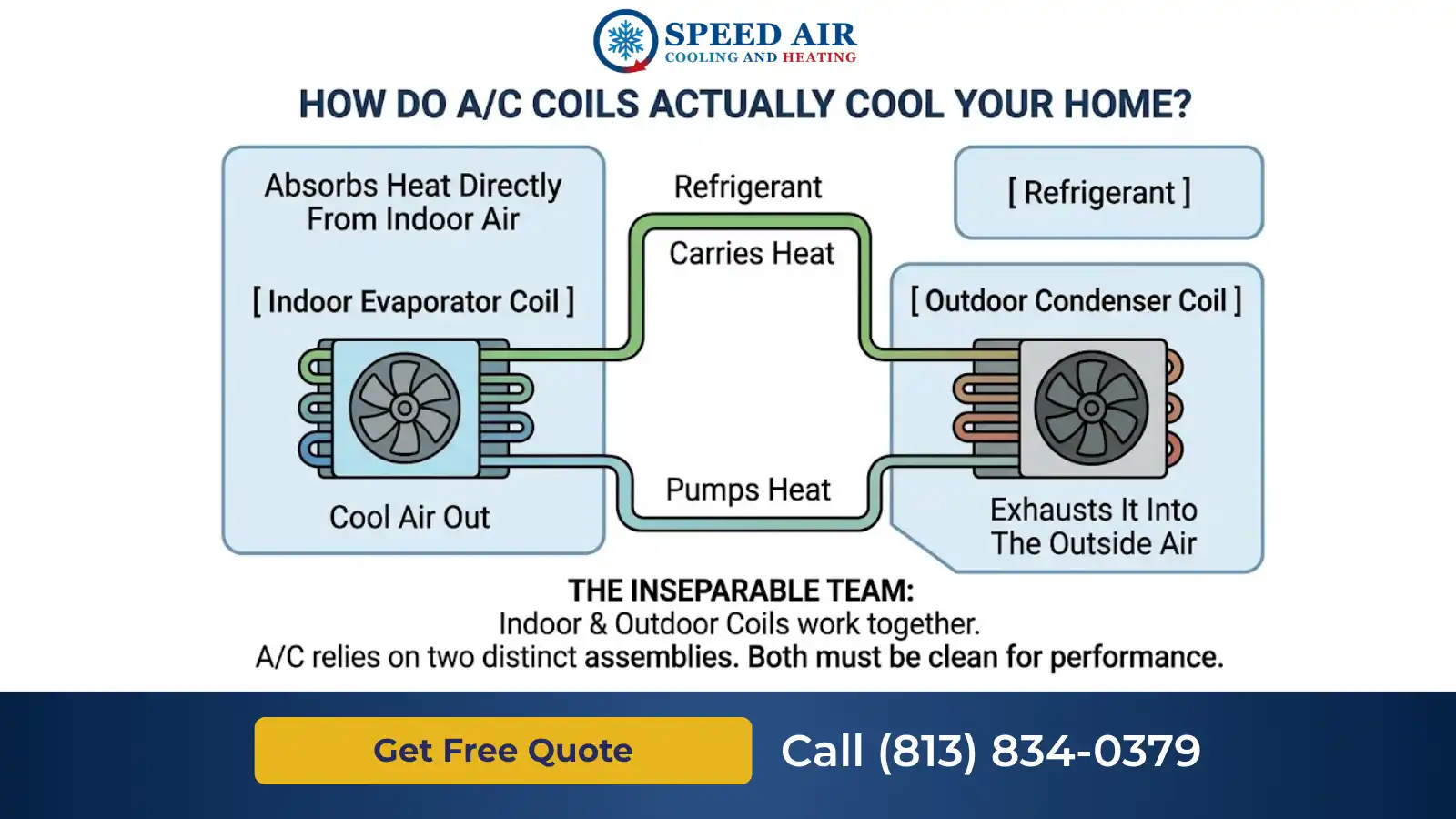
Air conditioners rely on two distinct aluminum and copper coil assemblies to cycle heat out of your living space. The indoor evaporator coil absorbs heat directly from indoor air as refrigerant runs through its tubes. Meanwhile, the outdoor condenser coil receives that trapped thermal energy and exhausts it into the outside air using a high-powered fan. If either coil gets blanketed in grime, thermal transfer stops cold.
The reality on the ground is that these two components work as an inseparable team. The evaporator coil acts like a thermal sponge, drawing heat out of the air coming through your return ducts. Once the refrigerant carries that heat outside, the condenser coil squirts that heat into the atmosphere. Block the surface area on either end with dust, and the entire refrigeration cycle falls apart.
What Really Happens When Your A/C Coils Get Dirty?
Dirty coils force your system into longer cooling cycles, higher energy consumption, and severe component strain. Restricted heat transfer lowers overall cooling efficiency, causing noticeable hot spots throughout your home while risking clogged condensate drain lines. Here is how uncleaned coils quietly sabotage your cooling equipment over time:
Extended System Operating Cycles
When grime insulates copper tubing, your air conditioner has to run significantly longer to satisfy the thermostat setting. Here’s the part most contractors won’t tell you: those extra run times don’t just waste electricity—they accelerate mechanical wear on your compressor windings and fan bearings.
Unbalanced Cooling and Hot Spots
When coil surfaces lose thermal transfer capability, the system struggles to deliver cold air consistently. You will likely notice that back bedrooms stay warm, or the unit runs endlessly without dropping the thermostat temperature.
Increased Component Stress
When heat transfer stops, internal operating pressures spike. That extra pressure forces your compressor and fan motors to pull extra electrical current, raising system stress and increasing the odds of an unexpected mid-summer failure.
Indoor Moisture and Drainage Troubles
Indoor evaporator coils strip humidity from the air as they cool. When airflow gets choked by grime, condensation cannot drain properly into the drain pan, which can cause water spills around your indoor unit.
Why Florida Homes Demand Special Coil Care
Florida’s extreme weather patterns keep residential cooling systems running almost constantly throughout the year. In St. Petersburg, high heat combined with dense coastal air pushes air conditioners to their operational limits.
Outdoor condensers sit right in the path of blowing sand, grass clippings, falling foliage, and salt air. Over time, these environmental factors bake onto the condenser fins, forming a tough thermal barrier. Because every home setup faces different outdoor exposures, a trained technician should inspect your unit to apply the right cleaning approach without damaging delicate aluminum fins.
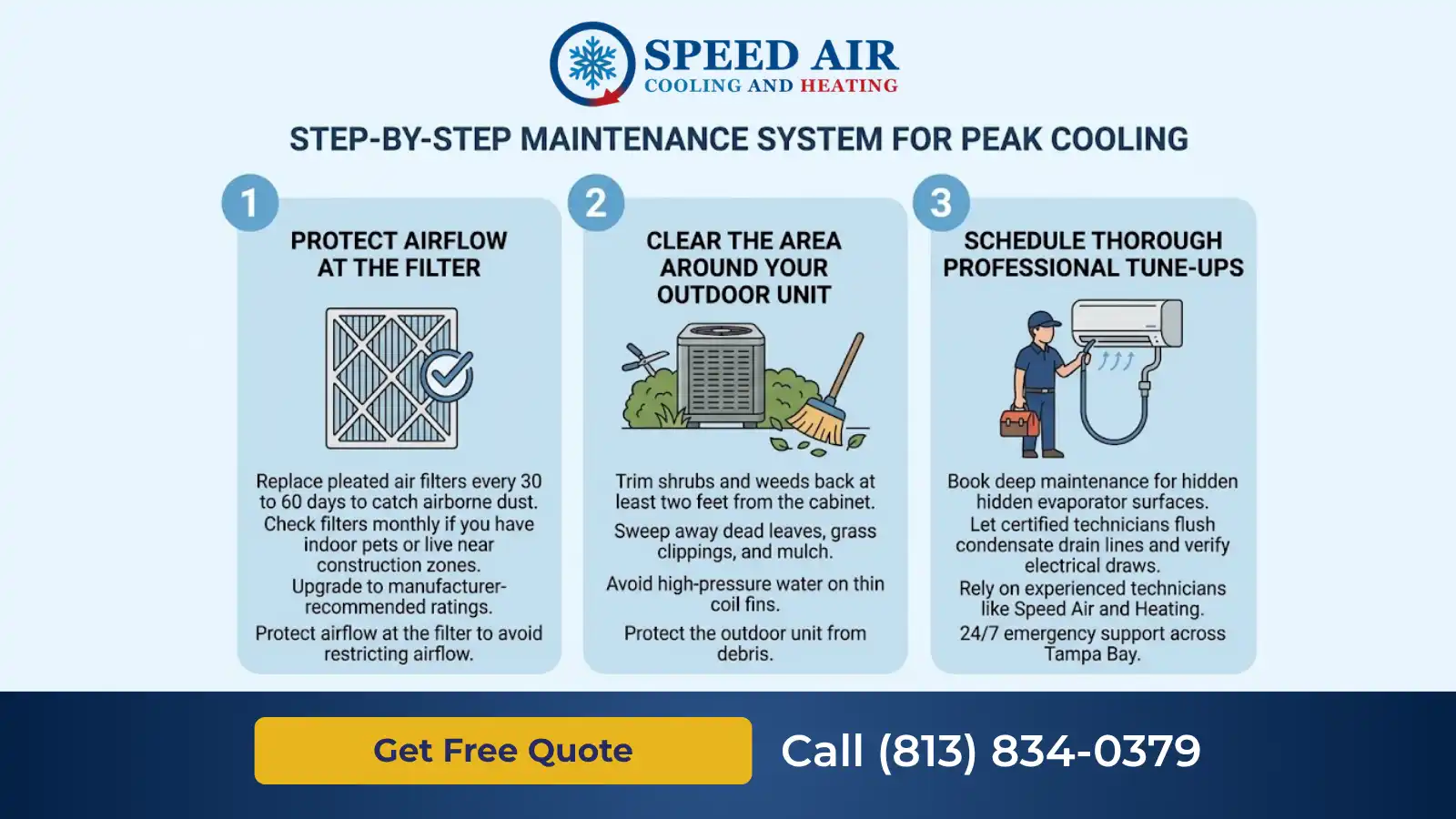
Step-by-Step Maintenance System for Peak Cooling
To keep your cooling system running efficiently year-round, follow this straightforward care system:
- Protect Airflow at the Filter
- Replace pleated air filters every 30 to 60 days to catch airborne dust before it reaches the indoor coil.
- Upgrade to filter ratings recommended by your system manufacturer to avoid restricting airflow.
- Check filters monthly if you have indoor pets or live near active construction zones.
- Clear the Area Around Your Outdoor Unit
- Trim shrubs and weeds back at least two feet from the condenser cabinet.
- Sweep away dead leaves, grass clippings, and mulch deposits from the base of the outdoor unit.
- Avoid spraying high-pressure water hoses directly into the thin coil fins during yard cleanup.
- Schedule Thorough Professional Tune-Ups
- Book deep maintenance visits to clean hidden evaporator surfaces safely.
- Let certified technicians flush out condensate drain lines and verify system electrical draws.
- Rely on experienced technicians like Speed Air and Heating for 24/7 emergency support across Tampa Bay.
Get a Free Quote!
Call (813) 834- 0379
How Home Care Compares to Professional Coil Service
| Service Area | Basic Homeowner Maintenance | Professional System Care |
| Filter Upkeep | Quick visual checks and filter replacements | Inspection of return duct seals and air bypass |
| Outdoor Unit Clearance | Clearing leaves and lawn debris around cabinet | Chemical coil foam cleaning and fin straightening |
| Indoor Coil Care | Checking accessible drain pans for sitting water | Deep cleaning cabinet-enclosed evaporator coils |
| System Diagnostics | Monitoring thermostat comfort and room temps | Testing refrigerant pressure and electrical draw |
Crucial HVAC Components Explained
- Evaporator Coil: The indoor aluminum and copper pipe assembly that extracts heat and humidity from your home’s air.
- Condenser Coil: The outdoor heat exchanger that releases collected indoor heat into the open air.
- Refrigerant: The specialized cooling fluid that circulates between both coils to carry heat out of your home.
- Blower Motor: The indoor fan assembly that pushes conditioned air through your supply duct network.
- Condensate Drain Line: The PVC drain pipe that routes pulled moisture safely out of your home.
Real-World Homeowner Advice
Don’t assume every cooling issue stems from a dirty coil. A system that runs nonstop can also suffer from low refrigerant charges, failing capacitors, or duct leaks. Spraying harsh off-the-shelf chemicals onto sensitive aluminum fins can corrode copper tubing or void your manufacturer warranty. Always let a licensed pro test overall system balance before tackling deep coil cleanings.
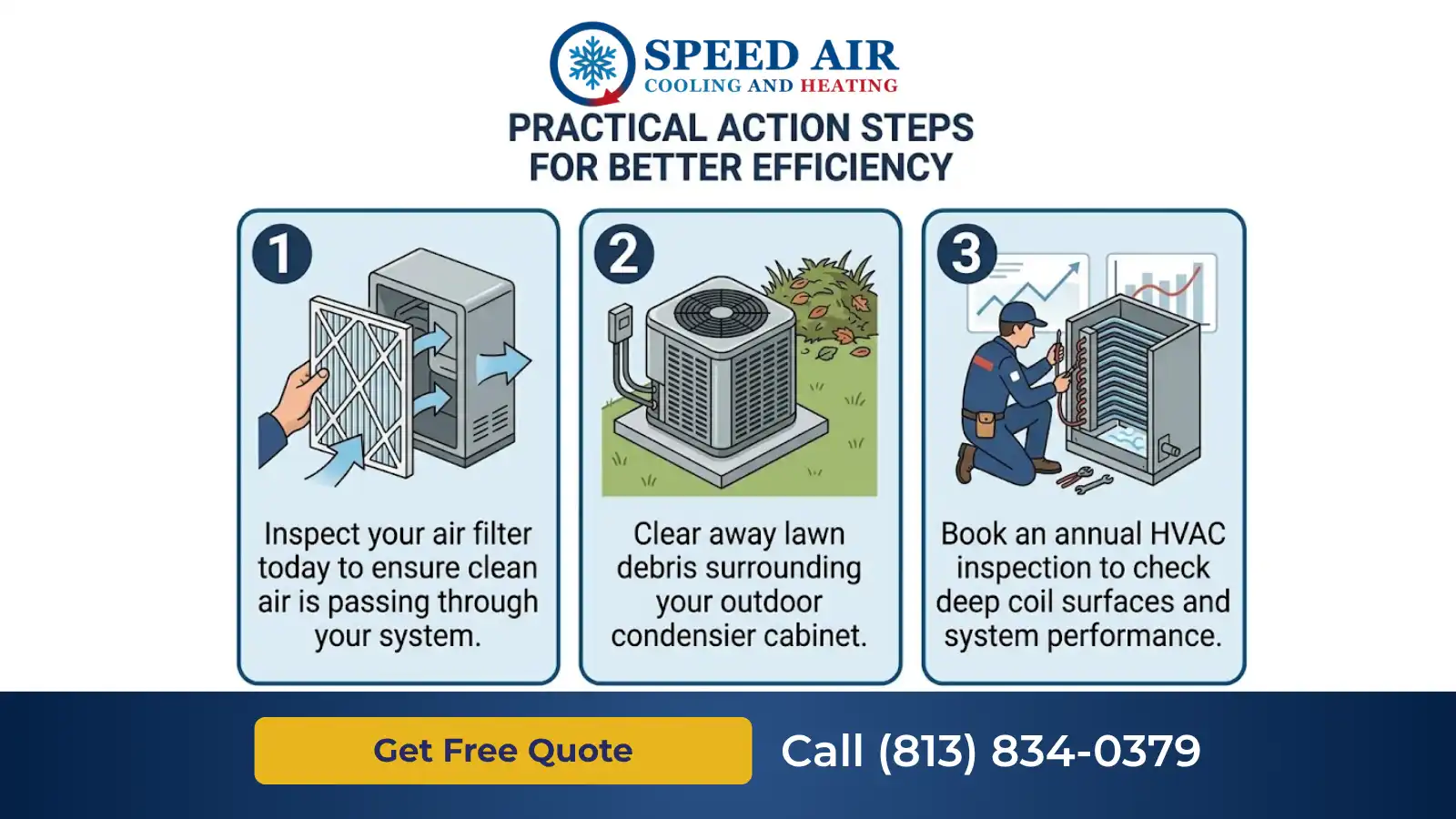
Practical Action Steps for Better Efficiency
- Inspect your air filter today to ensure clean air is passing through your system.
- Clear away lawn debris surrounding your outdoor condenser cabinet.
- Book an annual HVAC inspection to check deep coil surfaces and system performance.
Get a Free Quote!
Call (813) 834- 0379
Simple Solutions for Lasting Florida Comfort
Keeping your A/C coils clean is one of the smartest ways to preserve equipment efficiency, lower monthly electric bills, and maintain consistent cooling through muggy summers. Simple tasks like changing air filters and clearing yard debris go a long way, but deep coil cleaning requires special tools and technical training.
If your St. Petersburg system is running constantly or struggling to keep your home cool, trust the licensed professionals at Speed Air and Heating for fast, reliable support. Speed Air and Heating. Call (813) 834-0379 to get your system dialed in today.
Frequently Asked Questions
Q: How often should air conditioner coils be cleaned?
A: Coil cleaning frequency depends on pet hair levels, local dust, and annual run times. Having a professional inspect your coils during annual maintenance will help you determine when a deep clean is necessary.
Q: Can dirty coils cause an air conditioner to stop cooling?
A: Yes, heavy dirt buildup insulates copper coils, blocking thermal transfer and restricting airflow. This forces the unit to blow warm air, though electrical faults or low refrigerant can cause identical symptoms.
Q: Can I clean my air conditioner coils myself?
A: Homeowners can safely replace air filters and clear leaves away from the outdoor unit. Deep cleaning delicate indoor evaporator coils requires specialized chemicals and professional access to prevent equipment damage.
Q: What is the difference between an evaporator coil and a condenser coil?
A: The indoor evaporator coil absorbs heat and moisture from your home’s air. The outdoor condenser coil takes that trapped heat and releases it into the outdoor air.
Q: Does a dirty air filter affect A/C coils?
A: Yes, a clogged filter allows dust and debris to bypass filtration and coat the indoor coil fins. Replacing your air filter regularly protects your coils from heavy buildup.
Other Services We Offer