
End High Energy Bills with Commercial HVAC Replacement in St. Petersburg FL
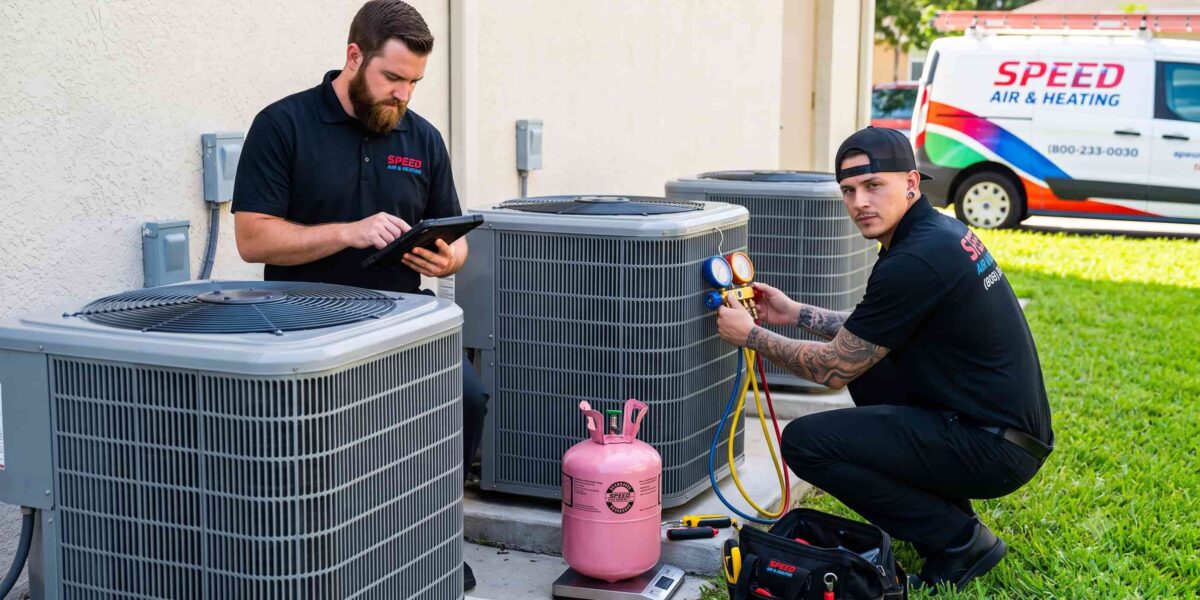
A commercial HVAC replacement in St. Petersburg FL becomes necessary once AC repairs no longer keep your system running efficiently. Florida’s heat pushes aging units past their limit every summer. Warm offices frustrate employees. Broken systems halt business operations, and repair bills pile up without fixing the real problem.
Newly repaired equipment restores comfort, lowers energy costs, and protects your business from unexpected downtime and costly disruptions. Let Speed Air and Heating replace your heating and cooling system.
Key Takeaways
- Lifespan Drop-off: Units over 12 years old lose massive cooling efficiency in coastal environments.
- Refrigerant Phaseout: Legacy systems face crushing recharge costs due to obsolete R-22 freon laws.
- Downtime Costs: Sudden mechanical failures cost retail and office spaces thousands in lost daily productivity.
What Are the Real Payoffs of Upgrading Your Building’s Air Conditioning?
A complete ventilation upgrade Corporate leaders slash overhead costs and immediately purify internal breathing environments. Besides reducing power expenditures, a commercial HVAC replacement in St. Petersburg FL stabilizes moisture levels to safeguard sensitive inventory. This capital improvement simultaneously enhances total property valuation and guarantees quiet, dependable building performance.
Ideal Performance Upgrades
- Predictable Budgets: Managers eliminate surprise financial outlays on sudden, mid-week emergency service calls.
- Humidity Control: Advanced extraction methods remove heavy atmospheric dampness to maintain an exceptionally crisp atmosphere.
- Code Compliance: Modernized configurations ensure that structural facilities satisfy current regional energy conservation mandates.

Get a Free Quote!
Call (813) 834- 0379
Signs You Need a Commercial HVAC Replacement in St. Petersburg FL
Outdated machinery broadcasts clear distress signals prior to complete mechanical collapse. Proprietors who identify these indicators early avert urgent system shutdowns and rising restoration fees.
- The framework exceeds a typical lifespan of fifteen years.
- Maintenance expenditures increase consistently during every consecutive season.
- Utility invoices spike despite stable facility power consumption.
- Certain zones remain uncomfortably warm while alternative spaces cool adequately.
- The physical apparatus requires obsolete chemical freon which federal mandates gradually eliminate.
- Unusual acoustic vibrations or pungent scents emanate from duct openings.
- Disruptive failures occur with greater frequency throughout peak operational hours.
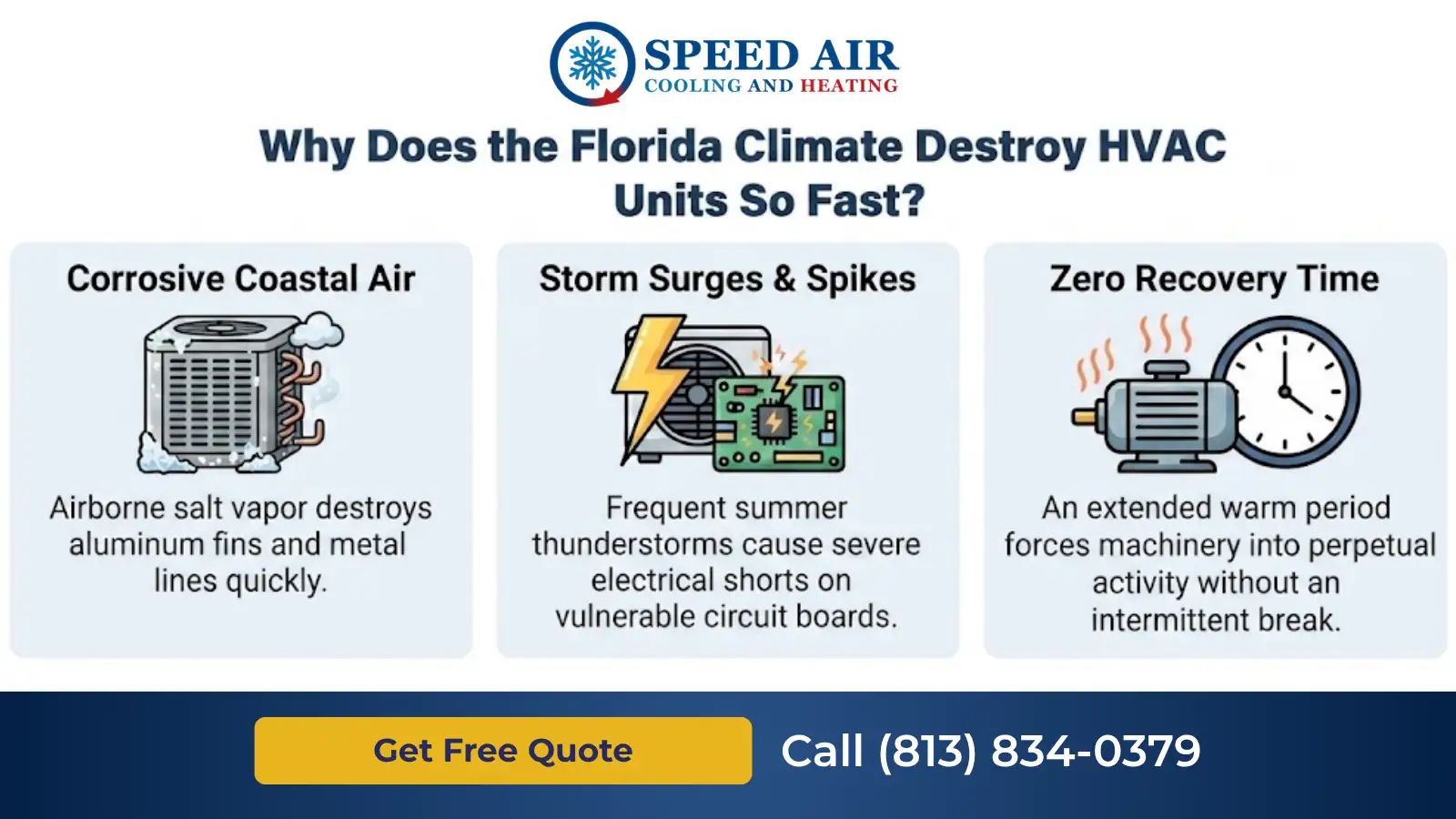
Why Does the Florida Climate Destroy HVAC Units So Fast?
High localized humidity and saline air corrode outdoor mechanical components rapidly. Marine elements degrade copper condenser coils far quicker than weather patterns in landlocked regions. Intense ninety-degree afternoon temperatures mixed with relentless tropical dampness prevent the compressor from turning off to rest. This continuous functional stress aggressively accelerates deterioration across every moving part inside the chassis framework.
Regional Weather Threats:
- Corrosive Coastal Air: Airborne salt vapor destroys aluminum fins and metal lines quickly.
- Storm Surges & Spikes: Frequent summer thunderstorms cause severe electrical shorts on vulnerable circuit boards.
- Zero Recovery Time: An extended warm period forces machinery into perpetual activity without an intermittent break.
Get a Free Quote!
Call (813) 834- 0379
What Is the Step-by-Step Installation Process for Businesses?
The replacement of substantial commercial tonnage requires precise logistical coordination to protect company workflow. Technicians organize the extraction and deployment sequence beforehand to minimize onsite disruption. From initial load calculations to final metal recycling, supervisors schedule each phase tightly for complete transparency.
The Execution Plan:
- Detailed System Audit: Experts inspect existing ductwork and compute accurate thermal requirements based on specific property square footage.
- Safe Extraction: The crew safely disconnects power wiring, reclaims legacy refrigerant, and removes the old chassis.
- Precision Installation: Technicians position the new configuration, secure structural mounts, and connect clean copper tubing.
- Airflow Testing: Specialists calibrate smart thermostats and evaluate static pressure to guarantee ideal climate regulation.
What Actually Happens on Installation Day?
A professional team isolates the work zone to ensure daily business functions continue smoothly. Workers arrive fully prepared, deploy protective coverings, and manage heavy physical labor without damaging the premises. Prior to departure, the crew executes stress tests and delivers all warranty documentation for corporate records.
Site Management Protocol:
- Protection: Drop cloths and physical barriers shield retail merchandise and staff from construction debris.
- Disposal: Personnel haul away old equipment and ethically recycle components according to current EPA guidelines.
- Handover: Representatives guide your facility manager through the newly configured digital thermostat controls.
How Should You Choose an HVAC Contractor You Can Trust?
The selection of an unverified subcontractor for large commercial projects introduces immense financial risks that can cripple operations. Smart business owners require a fully insured organization that holds a verifiable Florida mechanical license alongside deep industry experience. Always verify proper NATE credentials prior to contractual agreements.
Furthermore, demand comprehensive written estimates upfront to avoid hidden fees on the final invoice.
Comparing HVAC Installers
| Feature | Professional HVAC Company | Unlicensed “Chuck in a Truck” |
| Licensing & Insurance | This enterprise remains fully bonded, carries extensive indemnity protection, and holds an active Florida license. | This individual frequently lacks essential commercial liability insurance coverage entirely. |
| Estimates | Specialists provide highly detailed written load calculations alongside an explicit project scope. | Contractors offer verbal guesses that regularly lead to sudden mid-job price hikes. |
| Equipment Knowledge | NATE-certified technicians possess comprehensive instruction regarding heavy large-scale tonnage configurations. | These workers primarily handle basic residential split units rather than complex industrial layouts. |
| Aftercare | The corporation guarantees robust warranties and establishes structured long-term maintenance plans. | This operator completely disappears immediately after the final client check clears successfully. |
How Does a New Commercial AC Drop Your Monthly Bills?
The substitution of an inefficient cooling unit with a high-efficiency model yields significant financial returns over time. A commercial HVAC replacement in St. Petersburg FL leverages variable-speed technology to match thermal demands perfectly. This advanced mechanism prevents power waste in vacant zones while maximizing long-term utility reductions.
Cost-Saving Mechanics:
- Variable-Speed Compressors: These systems decrease output during low-demand hours to reduce total electricity consumption substantially.
- Tight Duct Integrity: Enhanced structural seals prevent the escape of expensive conditioned air into unoccupied drop ceilings.
- Rebate Eligibility: Multiple contemporary models qualify for local power company incentives that offset initial hardware investments.

Get a Free Quote!
Call (813) 834- 0379
Behind the Vents: What the Pros Know
“Engineers who calculate equipment volume solely by structural square footage commit an amateur error. A precise commercial installation evaluates window tint, computer heat output, and peak afternoon customer occupancy metrics. Excessive system capacity triggers rapid operational cycles that render indoor atmospheres uncomfortably humid rather than crisp.”
Take Control of Your Building’s Comfort
Delays until complete mechanical breakdown occurs incur massive emergency expenses and forfeit corporate revenue. Proactive equipment upgrades ensure that your facility maintains ideal temperatures while employee productivity stays high.
Executives who wish to halt continuous repair expenditures should secure a commercial HVAC replacement in St. Petersburg FL immediately. Contact us at (813) 834-0379 to arrange a comprehensive system evaluation with the Speed Air and Heating team.
Frequently Asked Questions
Q: How long does a commercial HVAC installation take?
A: Most commercial machinery replacements require one to three days for full completion. This timeline depends heavily upon overall hardware tonnage, roof access logistics, and necessary ductwork modifications.
Q: What is the true lifespan of a commercial AC unit?
A: Large industrial climate systems typically operate effectively for fifteen to twenty years. However, corrosive Pinellas County marine air and intense summer heat regularly reduce this operational expectancy. Failure to perform quarterly preventative maintenance accelerates this decline significantly.
Q: Can I replace just the broken AC compressor to save money?
A: An isolated component replacement within outdated machinery usually creates mismatched operational efficiency. The connection of a brand-new compressor to a degraded internal coil forces that fresh mechanism to overwork constantly. Alternatively, a complete hardware upgrade guarantees full manufacturer warranty protection and peak performance.
Q: Do I need a city permit to upgrade my commercial air conditioner?
A: Yes, regional building codes mandate official permits and formal inspections for major mechanical upgrades. Licensed professionals manage the entire bureaucratic process with city municipalities directly. This oversight ensures your structural installation complies perfectly with safety regulations.
Q: How do I know if I should repair or replace my business AC?
A: When service quotes exceed one-third of total replacement costs, property managers should choose an upgrade. If the current apparatus exceeds twelve years of age, utilizes banned chemical coolants, and drives up monthly utility expenses, a fresh installation represents the superior economic choice.