Hurricane season in Florida runs from June 1 to November 30. Strong winds, flying debris and flooding can damage outdoor AC units. A damaged system can leave your home hot and humid at the worst possible time. Good AC hurricane prep can help protect your system and get it running again safely after the storm. This guide from Speed Air and Heating covers the steps to take before, during and after a hurricane.
Ready to experience the Speed Air difference?
Licensed, insured, and available 24/7 across Tampa Bay.
Why Hurricanes Threaten Your AC
Your outdoor condenser sits outside, exposed to the weather. High winds can push it off its pad. Debris can bend coils and fan blades. Floodwater can damage electrical parts and the compressor. Power surges when electricity returns can also harm the system.
Before the Storm
Clear the Area
Remove loose items from your yard. Lawn furniture, toys, branches and planters can become flying objects in high winds. Trim trees and shrubs near the unit.
Check the Tie-Downs
Florida building codes require outdoor units in many areas to be secured with straps or anchors. Check that your unit is firmly attached to its pad. If straps are rusted or missing, have a technician replace them.
Turn Off the Power
Before the storm arrives, turn off the AC at the thermostat. Then switch off the breaker for the system. This helps protect it from power surges and flooding damage.
Avoid Tight Covers While Running
Some homeowners cover their units. A breathable cover can help keep debris out while the system is off. Never run the AC with a cover on, since it blocks airflow.
Cool the Home Early
If you plan to stay home, cool the house a bit cooler than usual before the storm. This can keep it comfortable longer if power goes out.
Ready to experience the Speed Air difference?
Licensed, insured, and available 24/7 across Tampa Bay.
After the Storm
Inspect Before Restarting
Do not turn the system back on right away. Walk outside and look at the unit. Check for:
- Debris inside or around the unit
- Bent fins or fan blades
- A tilted or shifted unit
- Damaged wires
- Signs of flooding
Do Not Run a Flooded Unit
If floodwater reached the unit, leave it off. Water can damage electrical parts and controls. Have a licensed technician inspect it before you use it.
Clear Debris Carefully
With the power still off, remove leaves and small branches by hand. Do not use tools on the coils.
Restore Power Slowly
If the unit looks safe, turn the breaker back on. Then turn the system on at the thermostat. Listen for strange sounds. Watch for weak cooling.
Consider Surge Protection
A whole-home or HVAC surge protector can help shield your system from voltage spikes when power comes back on. Ask your technician if it makes sense for your home.
Plan Ahead for Service
After a major storm, HVAC companies get many calls. Scheduling maintenance before hurricane season can help catch problems early. Keep your HVAC company’s number handy.
Planning Your AC Hurricane Prep Early
The best time for AC hurricane prep is before a storm is in the forecast. Early in the season, ask a technician to inspect your tie-downs, check the electrical disconnect and confirm that the outdoor unit sits level on a solid pad. Keep a short checklist near your breaker panel so everyone in the home knows how to shut the system off safely, and store your HVAC company’s phone number with your other emergency contacts. Taking these steps in calm weather makes it much easier to act quickly when a storm is approaching.
Commercial Properties
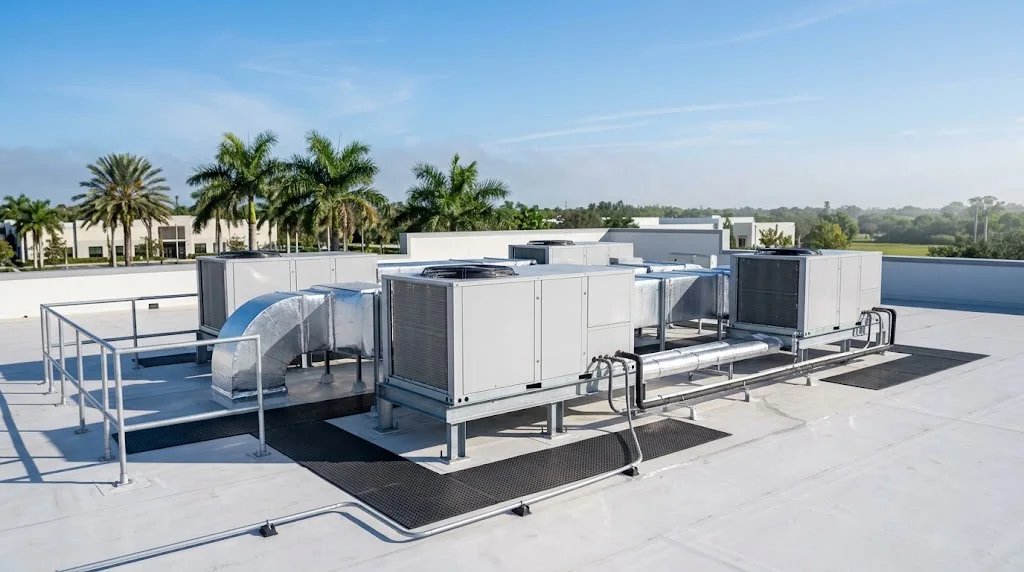
Businesses with rooftop units face extra risks, since high winds can damage panels, curbs and ductwork on the roof. Property managers should confirm that rooftop equipment is properly secured, clear loose items from the roof and plan how to shut down systems safely. After the storm, a professional inspection helps confirm that the units are safe to restart.
A Quick Word on Generators
Never run a portable generator inside your home or garage. Keep it far from windows and doors. Most portable units cannot power a central AC.
Simple Habits That Help Your AC
Small habits make a big difference. They are easy to keep up.
- Check your air filter every month.
- Replace it when it looks dirty.
- Keep supply vents open.
- Keep return vents clear.
- Trim plants back from the outdoor unit.
- Keep grass and leaves off the unit.
- Pour a little vinegar in the drain line, if your tech approves.
- Schedule a tune-up each year.
- Watch your power bills for sudden jumps.
- Call a pro when something seems off.
When to Call a Technician
Some problems need a trained tech. Call for help if you notice:
- Warm air from the vents
- Ice on the lines or unit
- Water pooling near the indoor unit
- Loud grinding or squealing
- A burning smell
- The breaker tripping again and again
These signs can point to bigger issues. Acting early can prevent more damage.
In Short
Secure your outdoor unit, clear your yard and turn off power before a hurricane. After the storm, inspect the unit and have a pro check it if it flooded.
How Speed Air and Heating Can Help
Speed Air and Heating is a licensed HVAC company (Lic# CAC1822334) based at 7000 Bryan Dairy Rd, Unit A5, in Largo, Florida. The team provides AC repair, AC installation, AC maintenance, mini split installation and repair, and commercial HVAC service across the Tampa Bay area, with 24/7 emergency service. Call (813) 834-0379 or visit Speed Air and Heating to request a free quote.
Quick Facts
- Atlantic hurricane season runs from June 1 to November 30.
- Many Florida outdoor units must be secured with tie-downs.
- Turn off the breaker before a storm.
- Never run an AC that is covered or flooded.
- Surge protectors can help protect HVAC systems.
FAQ
Q: Should I cover my AC unit during a hurricane?
A: A breathable cover can help while the unit is off. Remove it before running the system.
Q: Can I run my AC during a hurricane?
A: It is safest to turn it off during the storm to protect it from surges and debris.
Q: Does Speed Air and Heating offer emergency service?
A: Yes. Speed Air and Heating offers 24/7 emergency AC repair.
Other Services We Offer