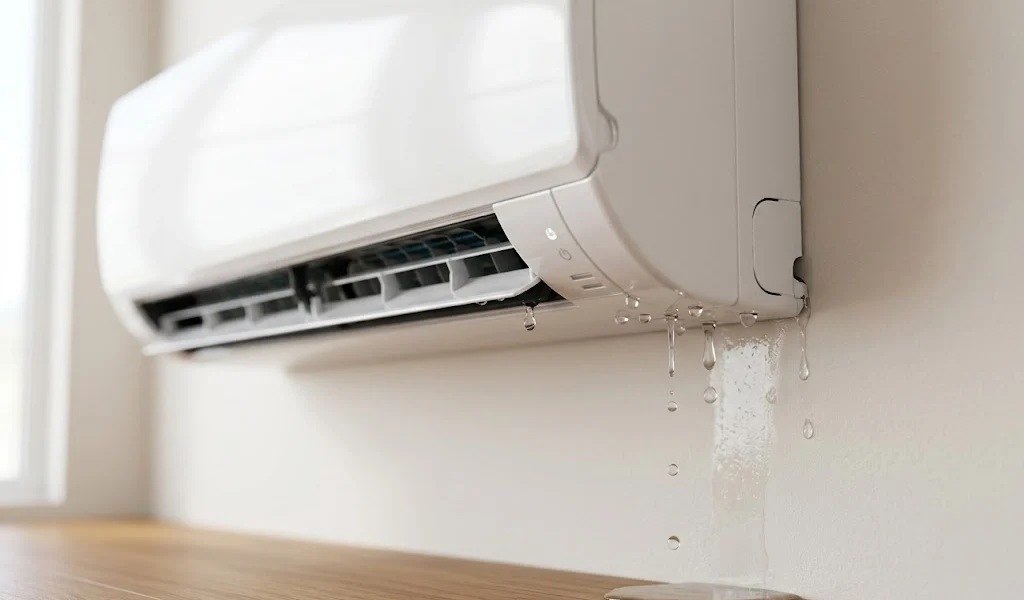
If you notice water around your air conditioner, don’t ignore it. Some condensation is normal during the cooling process, but water leaking into your home usually means something is wrong with the system’s drainage, airflow, or cooling components.
Why is my air conditioner leaking water? Common causes include a clogged condensate drain line, frozen evaporator coil, dirty air filter, damaged drain pan, restricted airflow, or a refrigerant problem. Some issues are simple maintenance concerns, while others require professional AC repair from Speed Air and Heating.
For Florida homeowners, where air conditioners operate frequently in hot and humid weather, a water leak can quickly become a comfort and property-damage concern.
Key Takeaways
- AC condensation is normal, but water leaking into your home is not.
- A clogged condensate drain is one of the most common causes of an AC water leak.
- Dirty filters and restricted airflow can cause the evaporator coil to freeze and later release excess water.
- Low refrigerant can contribute to coil freezing, but refrigerant problems require professional diagnosis.
- Turn off an actively leaking AC to help prevent additional water damage.
- Regular AC maintenance can help identify drainage and airflow problems before they become larger repairs.
Why Is My Air Conditioner Leaking Water?
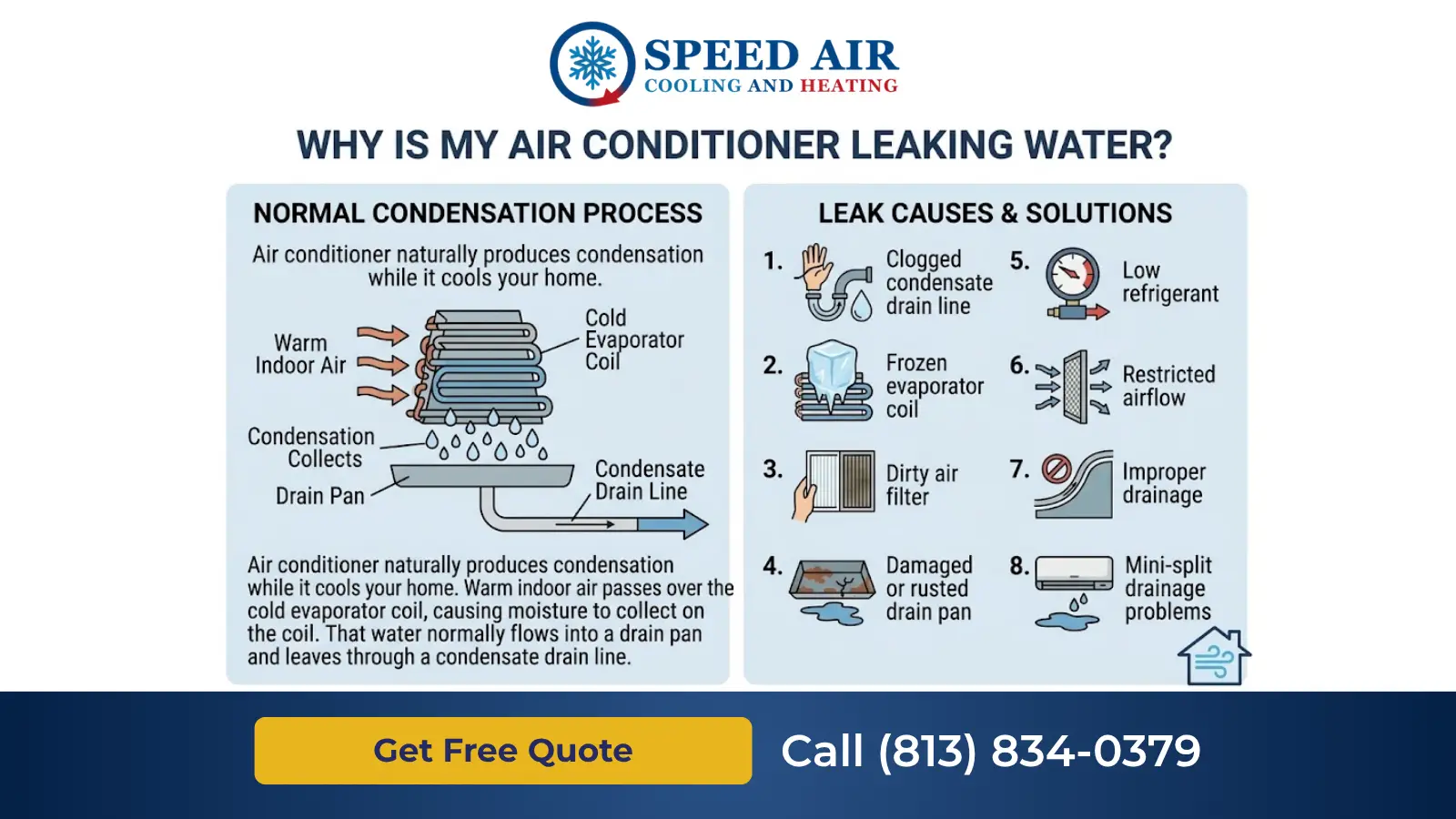
Your air conditioner naturally produces condensation while it cools your home. Warm indoor air passes over the cold evaporator coil, causing moisture to collect on the coil. That water normally flows into a drain pan and leaves through a condensate drain line.
A leak happens when that water cannot drain properly or when another HVAC problem causes excessive condensation or ice buildup.
Common causes include:
- Clogged condensate drain line
- Frozen evaporator coil
- Dirty air filter
- Damaged or rusted drain pan
- Low refrigerant
- Restricted airflow
- Improper drainage
- Mini-split drainage problems
The location of the water and the other symptoms your AC is showing can help narrow down the cause.
1. Clogged Condensate Drain Line
A clogged condensate drain is one of the most common reasons an AC leaks water.
Over time, algae, dust, dirt, and other buildup can restrict the drain line. When condensation cannot flow away from the system, water can back up into the drain pan and eventually overflow.
You may notice water around the indoor unit, a wet floor, ceiling stains, or the AC shutting down unexpectedly.
Some systems have a safety float switch designed to shut the unit off when the drain pan fills with water.
If the leak continues or you’re unsure how to safely access the drain system, professional AC service can identify and clear the blockage.
2. Frozen Evaporator Coil
A frozen evaporator coil can also cause an AC water leak.
Restricted airflow, a dirty filter, or refrigerant-related problems can cause the coil to become too cold and develop ice. When that ice eventually melts, the resulting water may overwhelm the normal drainage system.
Signs of a frozen coil include:
- Ice on refrigerant lines
- Frost around the indoor coil
- Weak airflow
- Poor cooling
- Long run times
- Water appearing after the system shuts off
If you see significant ice, turn the AC off and allow it to thaw naturally. If the coil repeatedly freezes, the underlying cause needs to be diagnosed rather than simply treating the water afterward.
3. Dirty Air Filter
A dirty air filter can contribute to a leaking AC by restricting airflow through the system.
When airflow is reduced, the evaporator coil can become excessively cold and freeze. Once the ice melts, excess water may collect around the indoor unit.
Check your filter regularly and replace it when it becomes dirty, using the filter type and size recommended for your system.
If a new filter doesn’t solve the leak, another problem may be affecting the system.
4. Damaged Drain Pan
The drain pan collects condensation underneath the evaporator coil. Over time, it can crack, corrode, or become damaged.
When that happens, water may escape before reaching the condensate drain.
If you notice visible cracks, heavy corrosion, or standing water around the pan, an HVAC professional can determine whether it needs repair or replacement.
5. Low Refrigerant
Low refrigerant can cause the evaporator coil to become excessively cold and freeze. When the ice melts, water can leak from the system.
However, an AC water leak does not automatically mean your refrigerant is low. Clogged drains, airflow problems, and damaged drain pans can create similar symptoms.
Other signs of a refrigerant-related problem can include poor cooling, long run times, ice on refrigerant lines, and repeated coil freezing.
Refrigerant problems should be diagnosed and repaired by a qualified HVAC professional.
What Should I Do if My AC Is Leaking Water?
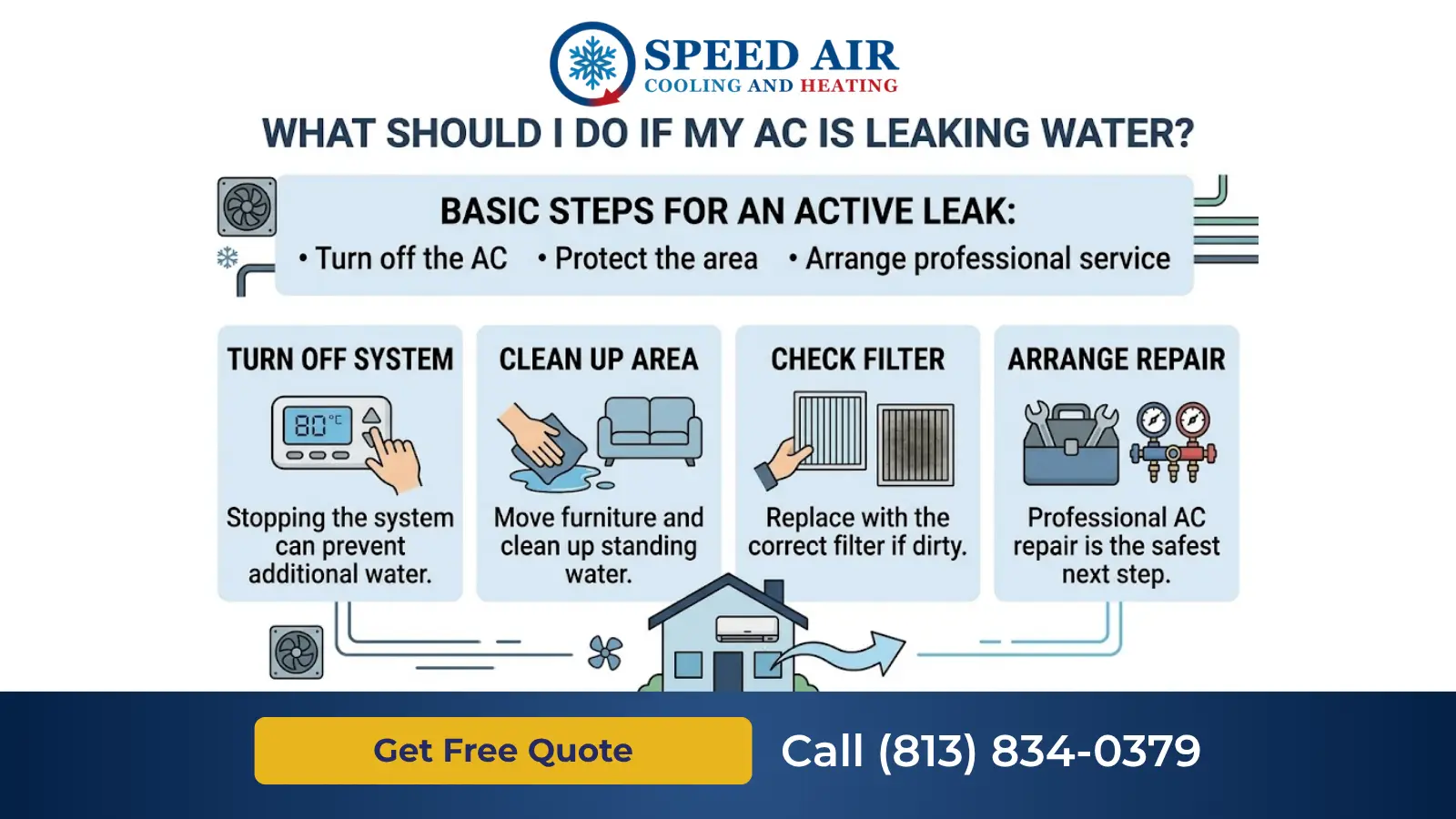
If your air conditioner is actively leaking, take a few basic steps:
1. Turn off the AC
Stopping the system can prevent additional water from accumulating while you determine the cause.
2. Protect the area
Move furniture, electronics, and other belongings away from the water. Clean up standing water where possible.
3. Check the filter
If the filter is visibly dirty, replace it with the correct filter for your system.
4. Look for ice
Check for visible ice or frost around the indoor unit or refrigerant lines. If you see significant ice, leave the system off while it thaws.
5. Arrange professional service
If the leak continues, returns after basic maintenance, or is accompanied by poor cooling, ice, unusual noises, or other problems, professional AC repair is the safest next step.
Get a Free Quote!
Call (813) 834- 0379
Why Is My AC Leaking Water From the Ceiling?
If your air handler or condensate system is located in an attic or above a ceiling, a clogged drain or overflowing pan can allow water to reach the ceiling below.
You may notice:
- Brown or wet ceiling stains
- Bubbling paint
- Dripping water
- Damp drywall
- Wet insulation
A ceiling leak should be addressed promptly because continued moisture can damage building materials.
Turn off the AC and arrange for HVAC service if water is actively entering the ceiling.
Can I Still Run My AC if It Is Leaking Water?
It is generally better to turn off an AC that is actively leaking until the cause is identified.
Continuing to operate the system may allow additional water to accumulate. If the underlying problem involves a frozen coil, blocked drain, or another malfunction, continued operation may also make the problem worse.
If water is near electrical components, do not attempt to troubleshoot the equipment yourself.
What About a Leaking Mini-Split?
Mini-split systems can also develop water leaks.
Possible causes include:
- Clogged condensate drain
- Dirty filter
- Frozen coil
- Damaged drain pan
- Drainage problems
- Refrigerant-related issues
If cleaning the accessible filter does not resolve the problem, professional mini-split repair can determine why the system is leaking.
How Regular AC Maintenance Can Help
Regular AC maintenance can help identify drainage and airflow problems before they cause a larger leak.
Maintenance may include inspecting the:
- Condensate drain
- Drain pan
- Air filter
- Evaporator and condenser coils
- Airflow
- Electrical components
- Overall system operation
Homeowners should also replace dirty filters and pay attention to unusual water, ice, or cooling problems.
Maintenance cannot prevent every failure, but it can help keep the system operating properly and identify developing issues earlier.
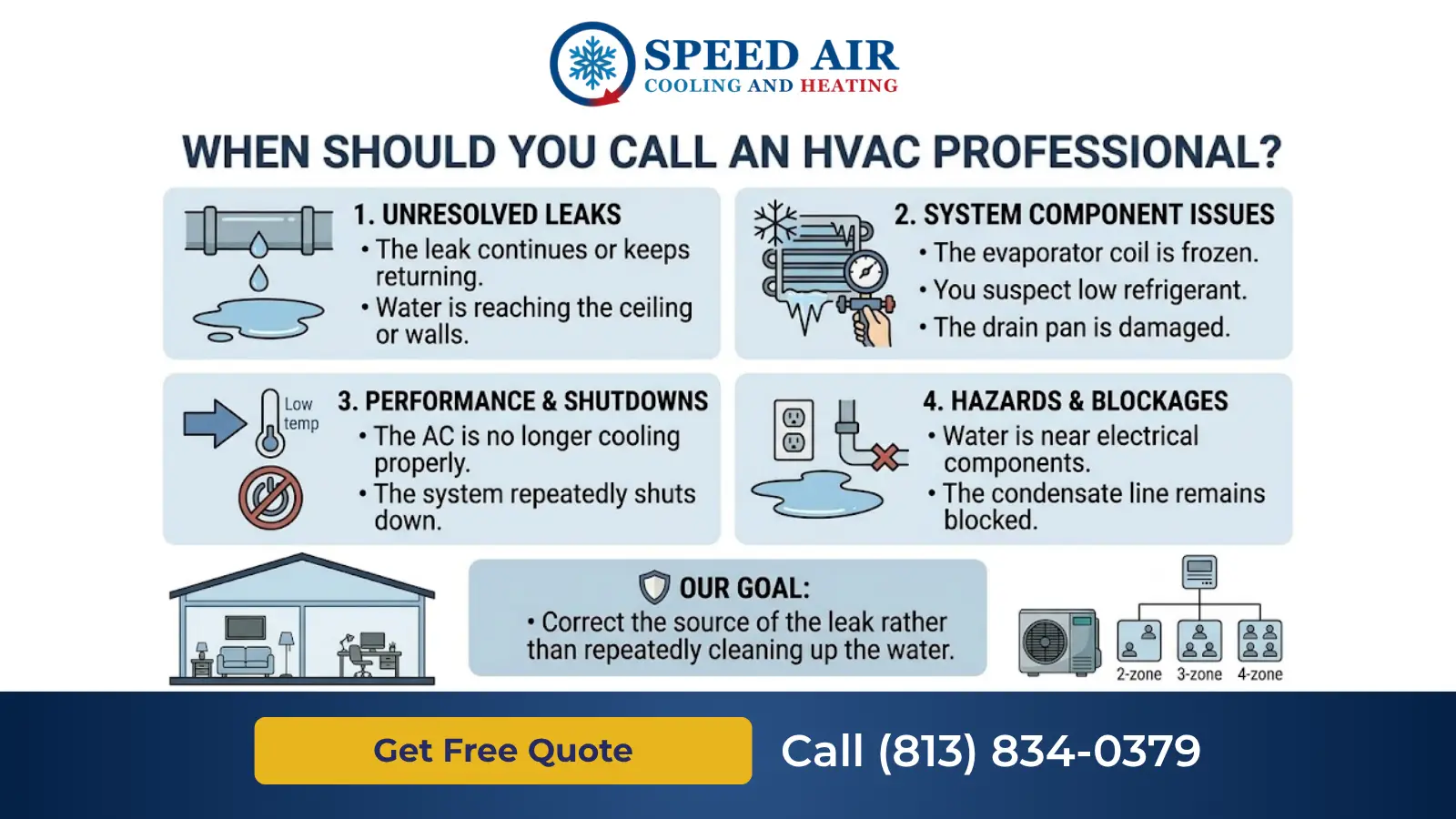
When Should You Call an HVAC Professional?
Professional AC repair is appropriate when:
- The leak continues or keeps returning.
- The evaporator coil is frozen.
- You suspect low refrigerant.
- The drain pan is damaged.
- The condensate line remains blocked.
- The AC is no longer cooling properly.
- Water is reaching the ceiling or walls.
- The system repeatedly shuts down.
- Water is near electrical components.
The goal is to correct the source of the leak rather than repeatedly cleaning up the water.
Get a Free Quote!
Call (813) 834- 0379
AC Repair in St. Petersburg, Florida
At Speed Air & Heating, we provide HVAC services designed to keep Florida homes and businesses comfortable year-round.
Our services include:
- AC Repair
- AC Maintenance
- AC Installation
- Mini-Split Installation and Repair
According to the company information provided, Speed Air & Heating has 15+ years of experience, offers 24/7 emergency service, and focuses on honesty, professionalism, craftsmanship, transparency, and care.
If your air conditioner is leaking water in St. Petersburg, Florida, contact Speed Air & Heating at (813) 834-0379 for HVAC assistance.
Frequently Asked Questions
Q: Why is my air conditioner leaking water?
A: The most common causes are a clogged condensate drain, frozen evaporator coil, dirty filter, damaged drain pan, restricted airflow, or refrigerant-related problem.
Q: Is water leaking from an AC normal?
A: Condensation from an operating AC is normal, but water leaking into your home or pooling around the indoor equipment is not.
Q: Can a dirty filter cause an AC to leak water?
A: Yes. A dirty filter can restrict airflow, which may contribute to a frozen evaporator coil. When the ice melts, excess water can cause leakage.
Q: Why is my AC leaking water when turned off?
A: A frozen evaporator coil can continue producing water as accumulated ice melts after the system shuts down. A clogged condensate drain can prevent that water from draining properly.
Q: Can low refrigerant cause an AC water leak?
A: Low refrigerant can contribute to coil freezing, which can eventually result in water leakage. However, a leak alone does not prove that refrigerant is low.
Q: Should I turn off an AC that is leaking water?
A: Yes. If water is actively leaking or pooling, turning off the AC can help prevent additional water damage while you arrange for service.
Other Services We Offer