
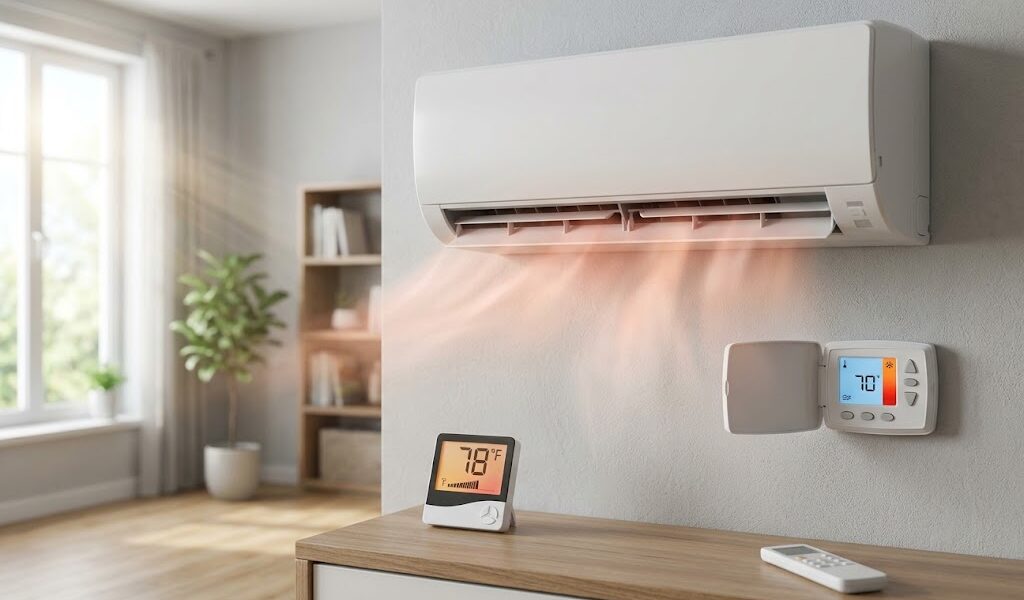
When your air conditioner is running but blowing warm air, something is preventing the system from properly removing heat from your home. As Speed Air and Heating explains, the cause could be as simple as an incorrect thermostat setting or dirty air filter, but it can also point to low refrigerant, a frozen evaporator coil, electrical trouble, or a failing compressor.
For homeowners in Clearwater, Florida, an AC problem can become uncomfortable quickly. Understanding the likely causes can help you decide what you can safely check yourself and when you need professional AC repair. It may also be helpful to ask, can a mini split cool multiple rooms, when considering alternative cooling options for your home.
Key Takeaways
- Check the thermostat before assuming the AC has a major problem.
- A dirty air filter can restrict airflow and contribute to poor cooling or frozen coils.
- Low refrigerant usually indicates a leak or another system problem that requires professional diagnosis.
- A dirty or blocked outdoor condenser can reduce the system’s ability to release heat.
- Ice on the indoor coil or refrigerant lines is a reason to stop running the system and arrange professional service.
- Electrical and compressor problems should be handled by a qualified HVAC professional.
Why Is My AC Blowing Warm Air?
The most common reasons an AC blows warm air include an incorrect thermostat setting, restricted airflow, a dirty outdoor condenser, low refrigerant, a frozen evaporator coil, or an electrical or mechanical problem.
An air conditioner has to complete a refrigeration cycle to cool your home. The indoor coil absorbs heat from the air, while the outdoor portion of the system releases that heat outside. If an important part of that process stops working correctly, the indoor fan may continue running even though the system is no longer producing cool air.
Here are the problems we recommend checking first. If you’re considering another cooling option, you may also wonder, can a mini split cool multiple rooms?
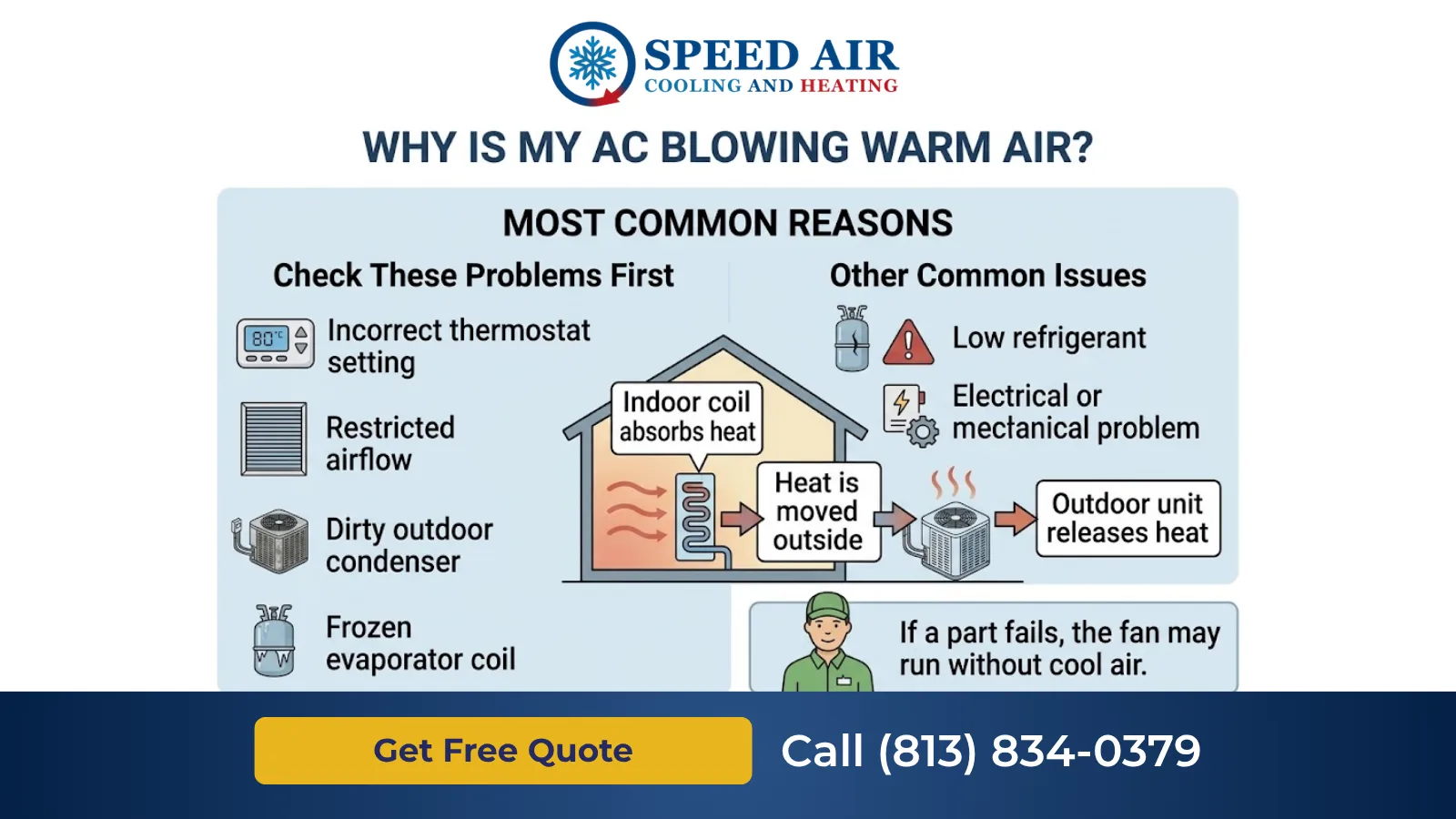
1. Check Your Thermostat Settings
Start with the simplest possibility.
Make sure the thermostat is set to Cool, not Heat or Fan Only. Also check that the temperature setting is lower than the current room temperature.
If the fan is set to On, it can continue circulating air even when the compressor isn’t actively cooling. That can make the air coming from your vents feel warm between cooling cycles.
If the thermostat uses batteries, replacing weak batteries may also help if the display or controls are behaving unexpectedly.
2. Your Air Filter May Be Dirty
A clogged air filter restricts the amount of air moving through the system. Poor airflow can reduce cooling performance and, in some situations, contribute to an evaporator coil freezing.
Check the filter if you haven’t replaced it recently. If it looks heavily covered with dust or debris, replace it with the correct filter for your system.
A clean filter doesn’t necessarily mean the AC will blow colder air by itself, but it helps the system maintain proper airflow and operate more effectively.
3. The Outdoor AC Unit May Be Dirty or Blocked
Your outdoor condenser needs adequate airflow to release the heat removed from your home.
Leaves, grass, dirt, and other debris can restrict airflow around the outdoor coil. This can reduce cooling performance and cause the system to run longer without adequately cooling the house.
You can safely remove loose debris around the outside of the unit, but avoid opening electrical panels or attempting electrical repairs.
4. The Evaporator Coil May Be Frozen
If your AC is blowing warm air and you notice ice on the refrigerant lines or indoor coil, the system may have a frozen evaporator coil.
Restricted airflow, dirty filters, refrigerant problems, and other faults can contribute to coil freezing. When the coil is covered in ice, the system cannot transfer heat normally, so you may get weak or warm airflow from the vents.
If you see ice, turn the cooling system off and allow it to thaw. Don’t try to chip the ice away. If the problem returns, the underlying cause needs to be diagnosed.
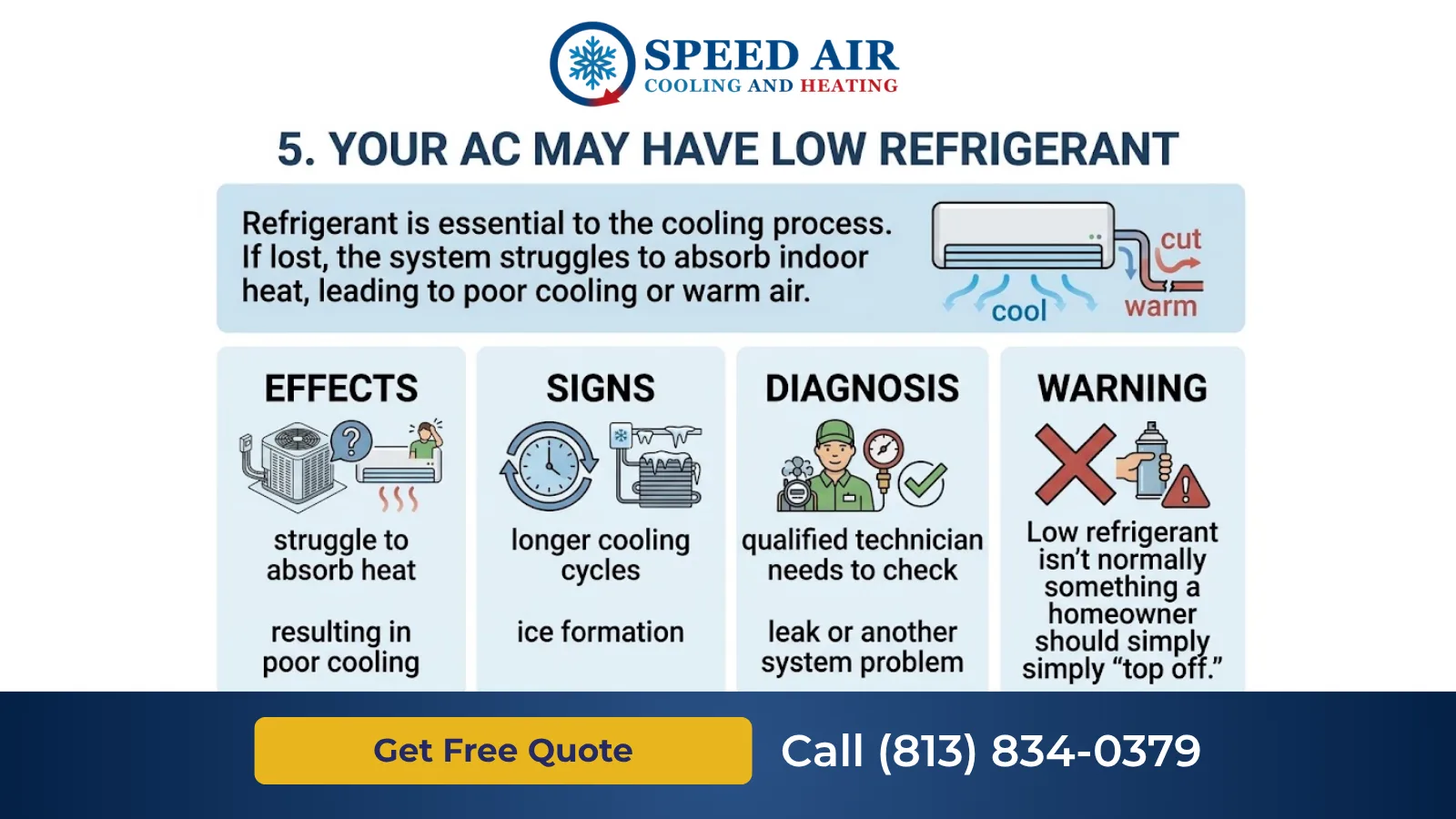
5. Your AC May Have Low Refrigerant
Refrigerant is essential to the cooling process. If the system has lost refrigerant, it may struggle to absorb heat from indoor air, resulting in poor cooling or warm air from the vents.
Low refrigerant isn’t normally something a homeowner should simply “top off.” A qualified technician needs to determine why the refrigerant is low and check for a leak or another system problem.
Signs can include longer cooling cycles, inadequate cooling, ice formation, or a noticeable decline in performance.
Get a Free Quote!
Call (813) 834- 0379
6. An Electrical Component May Have Failed
Your AC relies on electrical components to operate the blower, outdoor fan, compressor, and other parts of the system.
A failed capacitor, contactor, wiring problem, or other electrical fault can prevent the compressor or outdoor equipment from operating correctly. In that situation, the indoor blower may still run and push air through the vents even though the cooling process isn’t working.
Electrical troubleshooting should be left to a qualified HVAC professional.
7. The Compressor Could Be Having a Problem
The compressor is a critical part of the refrigeration cycle. If it isn’t operating correctly, the system may circulate air without effectively removing heat.
Compressor problems can be caused by electrical failures, overheating, age, or other system issues. Because compressor diagnosis and repair can involve electrical and refrigerant components, professional inspection is recommended. If you’re considering an alternative cooling setup, you may also wonder, can a mini split cool multiple rooms?
What Should I Do if My AC Is Blowing Warm Air?
Start with the basic checks:
- Confirm the thermostat is set to Cool.
- Make sure the temperature is set below the current room temperature.
- Check whether the fan is set to Auto.
- Inspect the air filter and replace it if it’s dirty.
- Look at the outdoor unit and clear loose debris around it.
- Check for visible ice on the refrigerant lines or indoor coil.
If these steps don’t restore cooling, avoid repeatedly restarting the system. Continuing to operate a malfunctioning AC can put additional strain on components such as the compressor.
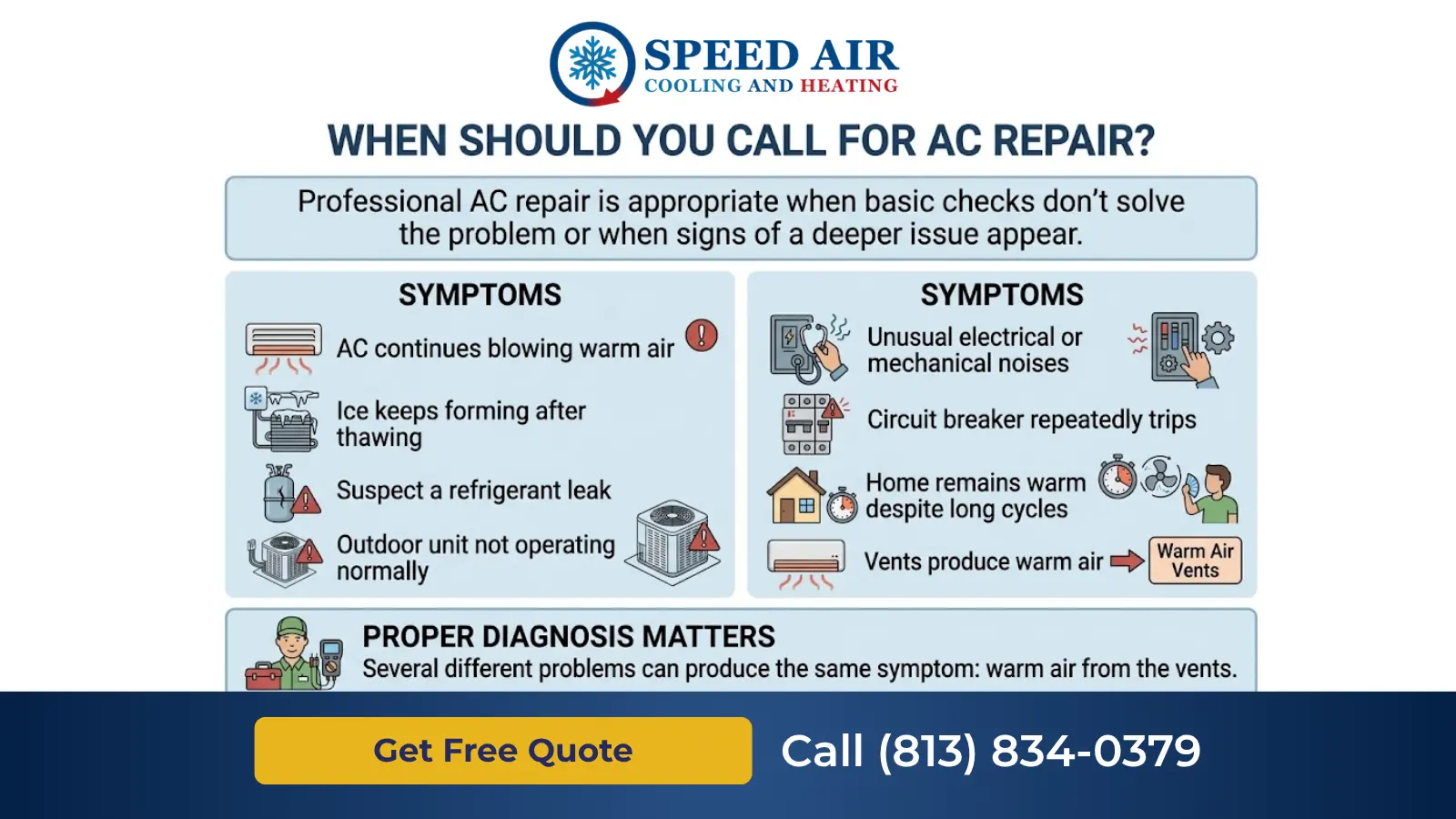
When Should You Call for AC Repair?
Professional AC repair is appropriate when the basic checks don’t solve the problem or when you notice signs of a deeper issue.
Call an HVAC professional if:
- The AC continues blowing warm air.
- Ice keeps forming after the system thaws.
- You suspect a refrigerant leak.
- The outdoor unit isn’t operating normally.
- The system makes unusual electrical or mechanical noises.
- The circuit breaker repeatedly trips.
- Your home remains warm despite long cooling cycles.
A proper diagnosis matters because several different problems can produce the same symptom: warm air from the vents.
Get a Free Quote!
Call (813) 834- 0379
How AC Maintenance Can Help
Regular AC maintenance can help identify developing problems before they turn into larger cooling failures.
Maintenance typically involves checking system components, airflow, filters, electrical connections, coils, and overall operation. It can also help identify conditions that may reduce cooling performance.
For Florida homeowners, routine maintenance is particularly useful because air conditioning systems often work hard for much of the year.
AC Repair in Clearwater, Florida
If you’re asking, “why is my AC blowing warm air?”, the right solution depends on what’s actually preventing your system from cooling.
At Speed Air & Heating, we provide AC repair, AC maintenance, AC installation, and mini-split installation and repair for Florida homes and businesses. Our company emphasizes honest communication, professional workmanship, transparency, and customer care.
When a simple thermostat adjustment or filter replacement doesn’t solve the problem, professional troubleshooting can help identify whether you’re dealing with airflow, refrigerant, electrical, mechanical, or other AC issues.
Final Thoughts
When your AC is blowing warm air, don’t immediately assume the system needs to be replaced. Start with the thermostat and filter, then look for obvious problems such as debris around the outdoor unit or ice on the system.
If those basic checks don’t restore cooling, the problem may involve refrigerant, electrical components, the compressor, or another part that requires professional diagnosis.
Getting the cause identified early can help you make a more informed decision about repair, maintenance, or eventual AC replacement.
For service in Clearwater, Florida, contact us today at (813) 834-0379.
Frequently Asked Questions
Q: Why is my AC blowing warm air but running?
A: The indoor fan can continue running even when the cooling portion of the system isn’t working. Common causes include incorrect thermostat settings, a dirty filter, frozen evaporator coil, low refrigerant, outdoor-unit problems, or electrical failures.
Q: Should I turn off my AC if it is blowing warm air?
A: If the system is clearly malfunctioning or you see ice, it’s sensible to turn off cooling and have the system checked rather than repeatedly running it. A malfunctioning system can place additional strain on components.
Q: Can a dirty air filter make my AC blow warm air?
A: Yes. A heavily clogged filter can restrict airflow, reduce cooling performance, and contribute to evaporator-coil freezing.
Q: Why is my AC blowing warm air after changing the filter?
A: If a new filter doesn’t solve the problem, the cause may be elsewhere, such as thermostat settings, a dirty outdoor condenser, frozen coil, refrigerant problem, electrical fault, or compressor issue. Professional diagnosis may be necessary.
Q: How often should I have my AC serviced?
A: Routine maintenance can help identify airflow, coil, electrical, and other performance problems before they become major failures. The appropriate maintenance schedule depends on the equipment, operating conditions, and manufacturer recommendations.
Other Services We Offer